View sample
Buy hard copy / 26,00 EUR
Buy e-book / 20,00 EUR
Borrow e-book / 16,00 EUR
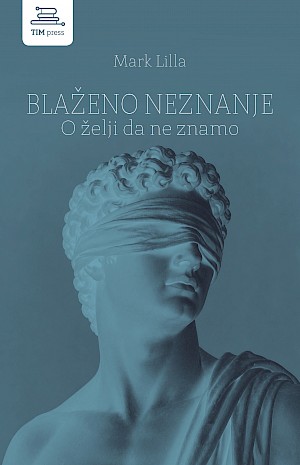
Aristotle claimed that all human beings desire to know. Yet it is equally true that, at times, we strive with all our might not to know. Why do we resist the truth? Why are we drawn to prophets, myths, and comforting illusions? And what does this desire for ignorance reveal about ourselves? In this lucid and provocative book, Mark Lilla explores one of the fundamental paradoxes of human nature: our simultaneous longing for knowledge and our impulse to flee from it. Drawing on sources ranging from the Bible and Plato’s dialogues to Sufi parables, Freud, and contemporary society, Lilla uncovers the ways in which we hide the truth from ourselves, as well as the fantasies we create in an attempt to escape reality. Ignorance and Bliss is an intellectual journey through the history of ideas and human self-deception—a book that challenges us to question our own beliefs and to ask how much we truly want to know.
* * *
Each of us could list reasons why we refuse to know certain things, and many of those reasons are perfectly sensible. It would not be wise for an acrobat to study the insurance policies covering her profession just before stepping onto the trapeze. A young poet is better off not asking an older one what he thinks of his verses. Even the question, “Do you love me?” should not slip from our lips before a few checkpoints have been passed. If, at every moment, we knew what others thought of us (imagine everyone wearing a small screen on their forehead displaying every thought), it would not only inhibit our actions but also make it difficult for us to develop an independent sense of self, free from the opinions of others. Even self-knowledge, the beginning of wisdom, requires us to resist at least this kind of knowledge about the world.
* * *
Historical nostalgia is a distinctive manifestation of the will not to know. It is the inability of the nostalgic person to accept and mourn the loss of a world they never experienced firsthand. That world is first summoned in the imagination and then, just as imaginatively, stripped away. This imagined world need not be entirely fictional; it can be constructed quite convincingly from authentic and carefully selected traces of the past. Once implanted in the imagination, it can serve the nostalgic mind as a standard against which selected experiences of the present are judged. In this game, the present will always come up short.
Mark Lilla
- ISBN: 978-953-369-076-6
- Dimensions: 128x200 mm
- Number of pages: 216
- Cover: paperback
- Year of the edition: 2026
- Original title: Ignorance and Bliss. On Wanting Not to Know
- Original language: English
- Translation: Marko Maras